By Anita
5 Reasons to Ditch Commercial Soap for Handmade Natural Soap
Walk down the soap aisle in any South African supermarket and you will find row after row of brightly coloured bars promising clean, moisturised skin. But flip one over and read the ingredients list. You will see things like sodium lauryl sulphate, parabens, artificial fragrance, and palm oil. These are not soap -- they are detergent bars dressed up in pretty packaging.
If you have ever wondered why your skin feels tight, dry, or itchy after showering, the soap you use could be the culprit. Here are five reasons to switch to handmade natural soap -- and what actually makes it different.
1. You Keep the Glycerin Your Skin Needs
When oils and lye react during soap making, they produce two things: soap and glycerin. Glycerin is a natural humectant, meaning it draws moisture from the air into your skin. It is one of the best things that can happen to dry or sensitive skin.
Large manufacturers remove the glycerin from their soap bars and sell it separately to the cosmetics industry -- it is more profitable that way. What you are left with is a stripped-down product that cleanses but does nothing to moisturise.
Why handmade soap is different
In cold process soap making (the method we use at Moondance), the glycerin stays right where it belongs -- in the bar. Every time you wash, your skin gets the benefit of this natural moisturiser. It is one of the main reasons people notice an immediate difference when they switch.
2. No Synthetic Detergents or Harsh Chemicals
Most commercial "soaps" are not technically soap at all. They are synthetic detergent bars (sometimes called syndets) made from petroleum-derived surfactants. Sodium lauryl sulphate (SLS) is the most common -- it creates that foamy lather people associate with "clean," but it strips your skin's natural protective oils in the process.
Other common additives in commercial soap include:
What you will find in natural soap instead
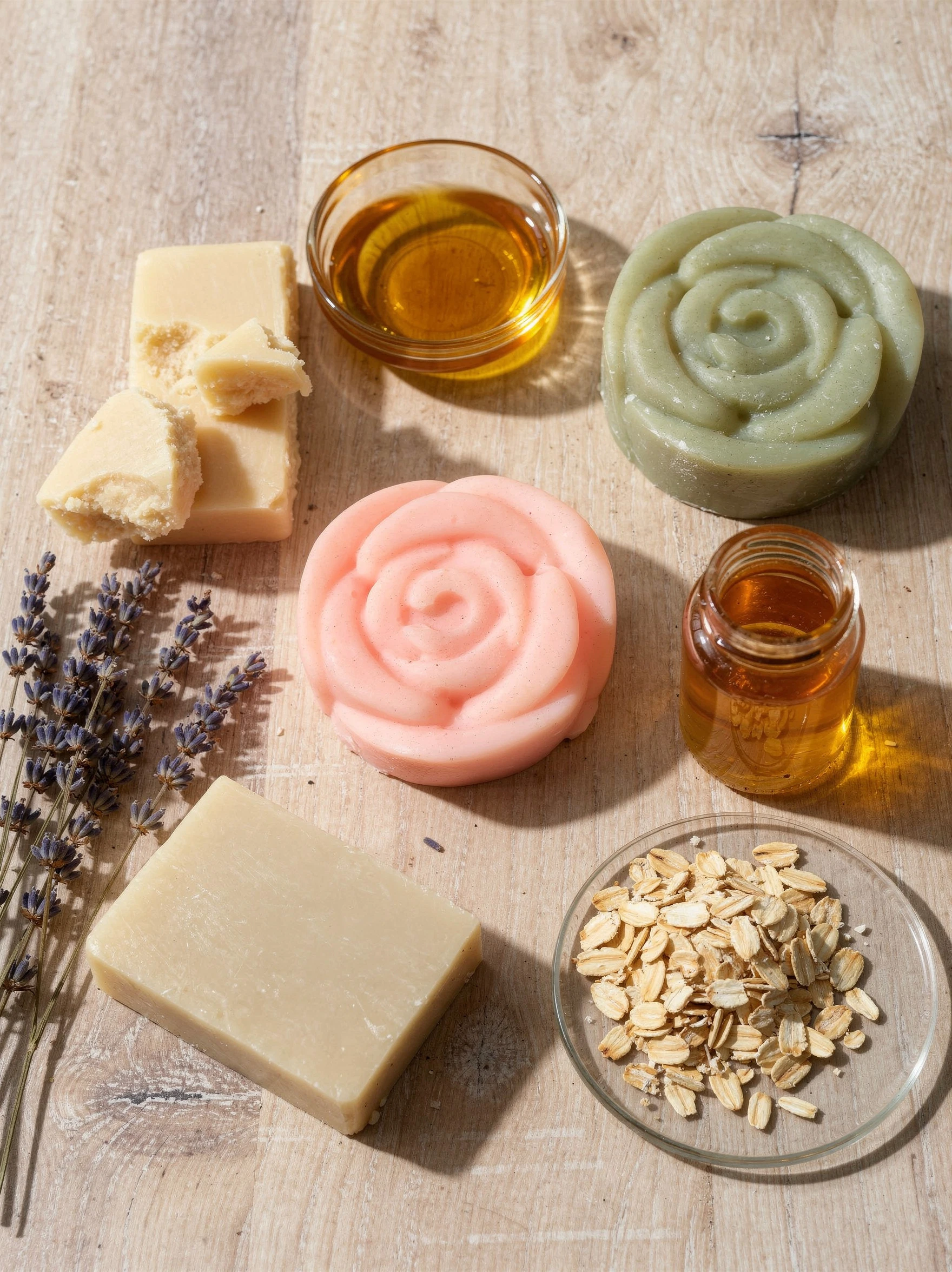
Real handmade soap uses plant oils, butters, and essential oils. At Moondance, our base is typically olive oil (gentle and rich in antioxidants), coconut oil (for lather), and shea butter (for deep moisture). When we add scent, it comes from pure essential oils -- not a chemistry lab.
3. Better for Sensitive, Eczema-Prone, and Problem Skin
If you deal with eczema, psoriasis, or generally reactive skin, commercial soap can make things worse. The synthetic ingredients and high pH levels disrupt your skin's acid mantle -- the thin protective layer that keeps irritants out and moisture in.
Natural soap, especially when made with ingredients like goat milk, oatmeal, or calendula, works with your skin rather than against it. Goat milk has a pH close to human skin and contains lactic acid for gentle exfoliation. Oatmeal is a proven anti-inflammatory. Calendula promotes healing.
Our Healing Skin Bar was designed specifically for troubled skin, combining calendula and lavender in a gentle olive oil base. For very dry skin, our 50% Shea Butter Soap delivers intense moisture without any synthetic additives.
4. No Palm Oil Means No Deforestation on Your Conscience
Palm oil is the dirty secret of the commercial soap industry. It is cheap, versatile, and in almost everything -- but its production drives massive deforestation in Southeast Asia, destroying orangutan habitats and releasing enormous amounts of carbon.
Some brands use "sustainable" palm oil certifications, but enforcement is inconsistent and the environmental damage is already catastrophic.
The simple alternative
At Moondance, we use zero palm oil. Our soaps get their lather from coconut oil and their richness from olive oil and shea butter. You get a better bar of soap and a clear conscience. It is one of the easiest environmental switches you can make in your daily routine.
5. You Support a Real Person, Not a Corporation
When you buy a bar of Moondance soap, you are supporting a small business in Blouberg, Cape Town. Every bar is made by hand, in small batches, with ingredients chosen for quality rather than cost. There is no factory line, no shareholders demanding cheaper formulations, no corner-cutting.
This is not just about feel-good purchasing. Small-batch production means more attention to quality, fresher products, and the ability to create specialised bars for specific skin needs. It is the difference between a mass-produced loaf of bread and one from your local bakery -- you can tell in the first use.
How to Make the Switch
Transitioning from commercial to natural soap is simple, but give your skin a few weeks to adjust. Here is what to expect:
Not sure where to start?
If you have sensitive skin, start with our Goat's Milk & Honey Soap or the Oatmeal Soap -- both are ultra-gentle.
If your skin is oily or acne-prone, try the Bentonite Clay Soap or Matcha Green Tea Soap for a deep but gentle cleanse.
For dry or mature skin, our 50% Shea Butter Soap is hard to beat.
And if you want to go plastic-free with your hair care too, our shampoo bars (Rosemary & Mint, Orange, or Charcoal) are a brilliant place to start.
Ready to Feel the Difference?
The best way to understand why people switch to natural soap is to try it yourself. Once you feel the difference -- softer skin, no tightness, no irritation -- it is hard to go back.
Chat with us on WhatsApp if you are not sure which product suits your skin best. We love helping people find their perfect match.
All Moondance products are handmade in Cape Town with 100% natural ingredients and zero palm oil.
More Articles
How Cold Process Soap Is Made and Why It Matters
Cold process soap takes weeks to make and uses no heat to force the reaction. Here is how we make every bar at Moondance, what happens during saponification, and why the slow method produces a better product.
Why Shampoo Bars Are Better for Your Hair and the Planet
Plastic bottles, sulfates, and wasted water -- liquid shampoo has baggage. Shampoo bars are a simpler, gentler way to wash your hair. Here is what makes them different and how to make the switch.