By Anita
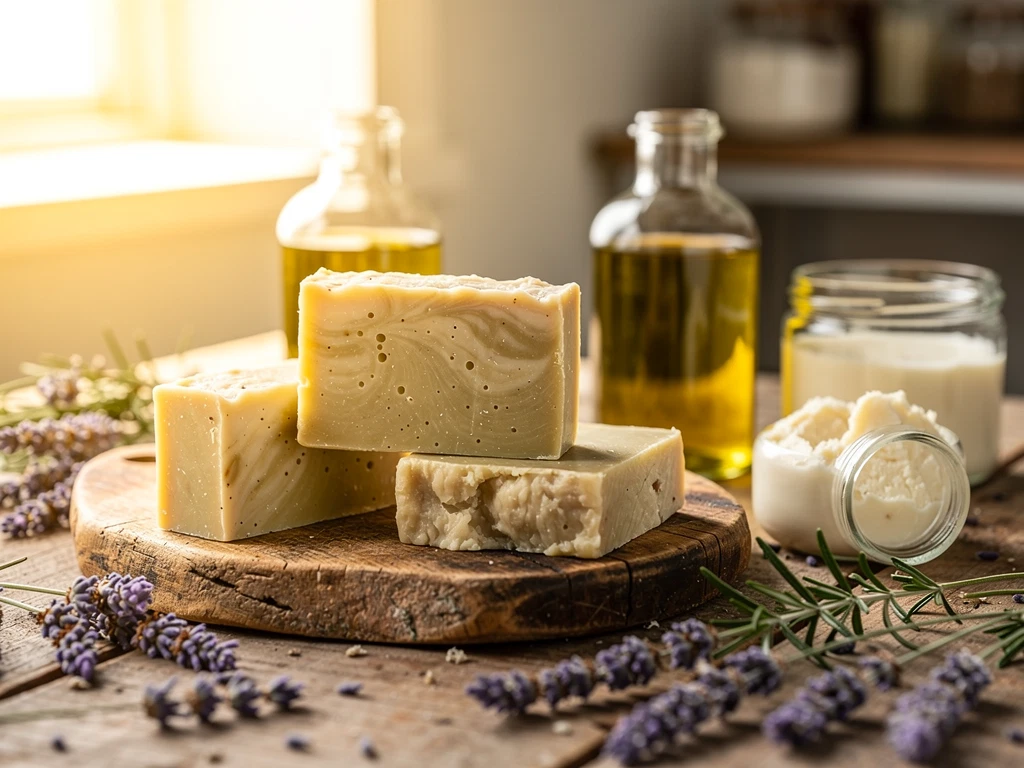
How Cold Process Soap Is Made and Why It Matters
Every bar of Moondance soap takes about six weeks from start to finish. That might sound like a long time for a bar of soap, but the slow timeline is the whole point. Cold process soap making is the oldest and simplest method of turning oils into soap, and it produces a bar that commercial methods cannot match.
If you have ever wondered what actually goes into handmade soap -- not the marketing version, but the real process -- here is how we do it.
The Chemistry: Saponification
Soap making is a chemical reaction called saponification. You combine fats (oils and butters) with a strong alkali (sodium hydroxide, also called lye), and they react to produce two things: soap and glycerin.
That is it. No factory required. The reaction happens on its own at room temperature, which is why the method is called "cold process." We do not use heat to force or speed up the reaction. We let it happen naturally.
The lye is fully consumed during saponification. There is no lye left in the finished bar -- it has been entirely transformed into soap. This is basic chemistry, not a shortcut. Every soap in history, from ancient Babylon to your grandmother's kitchen, was made with lye. There is no other way to make real soap.
Our Process, Step by Step
1. Choosing the oils
Every soap recipe starts with the oil blend. Different oils bring different qualities to the finished bar:
The oil blend determines everything about the finished bar -- how hard it is, how it lathers, how moisturising it feels, how long it lasts. Getting the ratios right is the craft.
2. Preparing the lye solution
We dissolve sodium hydroxide in liquid -- usually distilled water, but sometimes goat milk (for our Goat's Milk & Honey Soap) or brewed tea. The lye solution gets extremely hot when mixed, around 90 degrees Celsius. We let it cool to the right temperature before combining it with the oils.
When we use goat milk, we freeze it first and add the lye very slowly. This prevents the milk sugars from burning and preserves the vitamins and proteins that make goat milk soap so good for sensitive skin.
3. Bringing it together
Once the oils and lye solution are at the right temperatures, we combine them and mix. This is where saponification begins. The mixture thickens as the oils and lye start to react -- soap makers call this "trace" because you can trace a line on the surface and it holds.
At trace, we add whatever makes each bar unique:
These additions go in at trace because adding them too early would expose them to the lye before it has started reacting with the oils. Timing matters.
4. Moulding
The soap batter goes into moulds and gets insulated -- usually with towels. The reaction continues to generate gentle heat over the next 24 to 48 hours as saponification completes. During this stage, the soap goes through "gel phase," where it heats up, becomes translucent, and then cools back down. This is normal and produces a harder, longer-lasting bar.
After 24 to 48 hours, the soap is firm enough to unmould and cut into bars.
5. Curing
Here is where patience comes in. The cut bars go onto curing racks in our Blouberg studio, where they sit for four to six weeks. During this time, two things happen:
Excess moisture evaporates. A freshly cut bar contains a lot of water. As it cures, that water slowly leaves the bar, making it harder, longer-lasting, and milder on skin. A properly cured bar will outlast an uncured one by weeks in your shower.
Saponification finishes completely. While the bulk of the reaction happens in the first 48 hours, the remaining traces of lye continue to react with the oils over the curing period. By the end of four to six weeks, the bar is fully saponified and as gentle as it will ever be.
Cape Town's climate helps here. The dry West Coast air, especially in summer, provides ideal curing conditions. Our bars dry evenly without developing the sticky glycerin dew that can happen in humid environments.
Why Cold Process Is Different
There are several ways to make soap. Here is why cold process matters:
Cold process vs. melt and pour
Melt and pour soap uses a pre-made soap base that you melt down, add colour and fragrance to, and pour into moulds. It is popular for hobby soap making because it is quick and requires no handling of lye.
The problem is that the base is commercially produced and already has the glycerin removed or is made with synthetic detergents. You are decorating someone else's product, not making soap from scratch. The ingredients are limited to whatever is in the base.
Cold process gives us complete control over every ingredient. We choose the oils, the ratios, the additives. Nothing goes in that we did not put there.
Cold process vs. hot process
Hot process soap uses the same ingredients as cold process but applies external heat (usually a slow cooker) to force saponification to complete in hours instead of weeks. The result is a rougher-looking bar with a more rustic texture.
Hot process works, but the heat can degrade some of the beneficial properties of delicate oils and essential oils. Cold process preserves everything because the reaction happens at lower temperatures over a longer time.
Cold process vs. commercial production
Large-scale soap manufacturers use continuous processing methods that produce soap in minutes. They remove the glycerin (selling it separately for higher profit) and add synthetic hardeners, preservatives, and fragrances. The result is technically a detergent bar, not soap.
Cold process retains every drop of glycerin. This is the single biggest difference you will feel when you use handmade soap for the first time. Glycerin is a humectant -- it pulls moisture from the air into your skin. Commercial soap strips it out. Ours keeps it in.
What Makes a Good Cold Process Bar
Not all handmade soap is equal. Here is what to look for:
A proper cure. Any soap maker selling bars less than four weeks old is cutting corners. Undercured soap is softer, dissolves faster, and can be harsh on skin. All Moondance soaps cure for a minimum of four weeks, often longer.
Quality oils. Cheap soap uses cheap oils. Palm oil is the most common cost-cutting ingredient in the industry -- it is versatile and dirt cheap, but its production drives deforestation. We use zero palm oil. Our recipes rely on olive oil, coconut oil, shea butter, and castor oil.
No artificial fragrance. "Fragrance" on a label can mean dozens of undisclosed synthetic chemicals. We use only pure essential oils, chosen as much for their skin benefits as their scent.
Transparency. A good soap maker will tell you exactly what is in their product and how it was made. If the ingredient list is vague or full of chemical names you do not recognise, it is not cold process soap.
The Bars This Process Produces
Every product in the Moondance range is cold process. Here are a few that highlight what this method makes possible:
Healing Skin Bar -- Calendula and lavender in an olive oil base, designed for eczema-prone and reactive skin. The cold process preserves the anti-inflammatory properties of the calendula that heat would diminish.
Matcha Green Tea Soap -- Real matcha powder added at trace, keeping its antioxidant potency intact. Hot process would destroy much of what makes matcha beneficial for skin.
Charcoal Shampoo Bar -- Activated charcoal and tea tree essential oil for deep cleansing without stripping. The careful oil balance in our shampoo formulation is only possible with the precision that cold process allows.
50% Shea Butter Soap -- An exceptionally high shea butter content that produces an incredibly rich, moisturising bar. This recipe would not work with melt-and-pour or hot process methods -- the texture and feel depend on the slow, gentle saponification of cold process.
Try the Difference
The simplest way to understand cold process soap is to use one. The lather feels different -- creamier, richer. Your skin feels different after -- softer, not tight. The bar lasts longer in your shower because it is denser and harder than commercial soap.
If you are not sure which bar to start with, message us on WhatsApp. We will recommend something based on your skin type and what you are looking for. Every bar is handmade in our Blouberg studio, cured for at least four weeks, and made with nothing but natural ingredients.
All Moondance products are cold process, palm-oil-free, and handmade in Blouberg, Cape Town.
More Articles
Why Shampoo Bars Are Better for Your Hair and the Planet
Plastic bottles, sulfates, and wasted water -- liquid shampoo has baggage. Shampoo bars are a simpler, gentler way to wash your hair. Here is what makes them different and how to make the switch.
Why Cape Town Is the Perfect Place to Make Natural Soap
From the fynbos-rich Western Cape to the clean Atlantic air of Blouberg, Cape Town offers everything an artisan soap maker needs. Here is why location matters when it comes to handmade soap.