By Anita
Best Soap for Eczema in South Africa: What to Look For (and What to Avoid)
If you have eczema, or your child does, you have probably stood in the soap aisle at Clicks or Dis-Chem turning boxes over to read the small print. Everything says "gentle". Half of it says "dermatologist tested". Very little of it tells you what is actually in the bar.
We should be clear about one thing before going any further: no soap treats eczema. Not ours, not anyone's. What a soap can do is either strip the little oil your skin barrier has left, which sets off a flare, or clean you without doing that. The whole job of an eczema-friendly soap is to get out of the way.
This guide covers what to look for on a label, what to avoid, which of our bars suit which kind of eczema-prone skin, and how to wash so that whatever you use does the least harm.
First, What Soap Can and Cannot Do
Eczema (the common form is atopic dermatitis) is a barrier problem. Skin that should hold water in and keep irritants out does neither very well, so it dries, itches, and reacts to things that other people's skin ignores. Treating it, with steroid creams, prescription emollients, or anything else, is a job for your GP or a dermatologist, and nothing on this page replaces that.
Soap sits one step earlier in the day. Ordinary supermarket soap is built to remove oil efficiently, which is exactly what eczema-prone skin cannot afford. A bar that cleans more gently, and leaves some oil behind, simply gives your barrier less to recover from.
A word on the "soap-free" emollient washes from the pharmacy: they exist for good reason. If your dermatologist put you on one and it works, keep using it. Handmade soap tends to suit people who prefer a bar, want a shorter ingredient list, or found that the pharmacy options did not agree with them either.
What to Look For
A short ingredient list
Fewer ingredients means fewer things to react to. Our unscented boerseep has three: grass-fed beef tallow, lye, and water, and the lye is used up entirely in making the soap. Most of our plant-oil bars have five. A commercial "sensitive skin" bar can run to twenty.
Oils left in the bar
Cold-process soap made properly is formulated with more oil than the lye can turn into soap, so a percentage stays in the finished bar as free oil. That, along with the natural glycerin the process creates, is why a good handmade bar leaves skin feeling soft rather than tight. Commercial soap usually has the glycerin removed and sold separately.
Ingredients with a track record for itchy skin
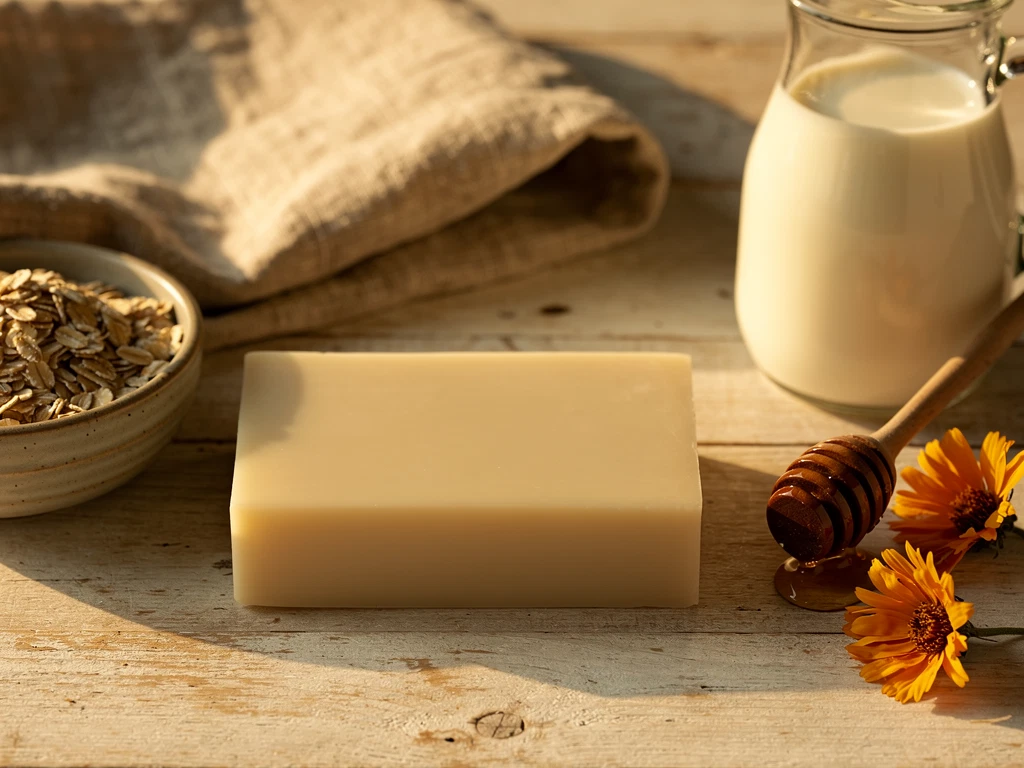
- Colloidal oatmeal. Finely milled oats that suspend in water. Oats contain compounds called avenanthramides that calm itching on contact, and colloidal oatmeal has more proper evidence behind it than almost any other natural skincare ingredient. It is the reason our oatmeal soap exists.
- Goat milk. Naturally rich in fats and a gentle lactic acid, which is why goat milk bars tend to feel creamy rather than squeaky. We wrote a whole post on goat milk soap for sensitive skin if you want the detail.
- Raw honey. A humectant, which means it draws moisture into the skin rather than pulling it out.
- Shea butter. High in the fatty acids and vitamins that dry, damaged skin is short of. Our 50% shea butter bar uses it as half the recipe, not a sprinkle.
- Tallow. Shares much of its fatty acid profile with human skin, which is the usual explanation for why a tallow bar feels moisturising rather than drying.
- Calendula. The traditional botanical for irritated skin, and the signature botanical in our healing skin bar.
Unscented, or scented only with a gentle essential oil
Fragrance is the single most common trigger in products sold for sensitive skin. Be aware of the difference between "fragrance-free" and "unscented" on commercial packaging: an unscented product can still contain a masking fragrance to hide the smell of the base. When we say unscented we mean nothing added at all.
What to Avoid
- Sulphates (SLS, and to a lesser degree SLES). These are detergents, and they are very good at stripping oil. They turn up in most body washes, including many labelled "soap-free".
- Synthetic fragrance, usually listed as "parfum". The top trigger, and the one most often hidden behind a pleasant name on the front of the box.
- Antibacterial bars. Unless your doctor has prescribed an antimicrobial wash for a specific reason, skip them. They are harsher than ordinary soap, and there is no benefit for eczema in killing the bacteria on healthy skin.
- Scrubs and exfoliating bars. Coffee grounds, poppy seeds, loofah, pumice. Even the natural ones abrade skin that is already compromised. The only exfoliant that belongs near eczema is colloidal oatmeal, which is too fine to scratch.
- Strong essential oils in high doses. Citrus, peppermint, cinnamon, and tea tree are all known sensitisers. That includes some of our own bars: we would not point someone with a flare at our lemon zest soap, lovely as it is.
- "Dermatologist tested" as a reason to buy. It means a dermatologist tested it. It does not mean the test went well. Read the list on the back instead.
- Aqueous cream, left on the skin. It is still the default South African answer to eczema and fills a pharmacy shelf on its own. Used as a soap substitute and rinsed off, it is fine. Left on as a moisturiser, its sodium lauryl sulphate content can thin and irritate a barrier that is already weak, which is why dermatologists have advised against that use for over a decade. Wash with it if it suits you; moisturise with something else.
Which Moondance Bar for Which Skin
Soap for eczema that is flaring right now
Wash with as little as you can get away with, and if you use a bar at all, use the plainest one you own. For us that is the Tallow Boerseep, Unscented (R60, 150g). Three ingredients, no plant oils, no scent. Along with its lemon-scented twin, it is also the only bar we make without coconut oil, which matters if you are one of the people coconut oil disagrees with.
Everyday soap for dry, itchy eczema
The Oatmeal Soap (R60, 100g). Colloidal oatmeal, oat milk, and shea butter in an olive oil base. This is the bar we hand to most people who arrive with this question.
Soap for eczema in babies and small children
Also the Oatmeal Soap. Two caveats from us: a baby under a year mostly needs warm water and does not need soap every day, and if your clinic sister or paediatrician has recommended a routine, follow that. When you do use a bar, use a very small amount and rinse well.
Soap for eczema on the hands
The Goat's Milk and Honey Soap (R50, 100g). The honey helps hold moisture in hands that are washed many times a day and crack in the cold.
Soap for very dry, rough skin
The 50% Shea Butter Soap (R60, 120g), heels and elbows included. It is scented with rose, so leave it aside during a flare.
Soap for reactive skin that flares easily
The Healing Skin Bar (R50, 80g) with calendula and lavender. One honest note: it does contain lavender essential oil, so if fragrance of any kind is a known trigger for you, start with the oatmeal or the boerseep and come back to this one later.
How You Wash Matters as Much as What You Wash With
The bar is only part of it. These six habits do more for eczema-prone skin than any change of soap:
- Lukewarm water, not hot. Hot water strips oil faster than any soap does. Cape Town winters make this a hard rule to keep, but it is the one that counts most.
- Keep it short. Five to ten minutes in the shower or bath, not twenty.
- Soap only where you need it. Armpits, groin, feet, hands. Water alone is enough for arms, legs, and torso on most days.
- Pat dry, do not rub. Leave the skin slightly damp.
- Moisturise within three minutes. This is the step that makes the biggest difference, and it works because damp skin holds the moisturiser in. Our body butters are 50% shea butter and work very well on dry patches, but all five are scented with essential oils. If fragrance is a known trigger for you, use your prescribed emollient on affected skin and keep the body butter for everywhere else.
- Let the bar dry between uses. A soap dish with drainage keeps the bar firm and stops it dissolving into a soft, soggy lump. It also makes it last twice as long.
If Cape Town's seasons are part of the problem for you, the dry south-easter in summer and heaters in winter, our winter skincare routine covers the seasonal side in more detail.
Trying a Bar Without Committing to a Box
We are in Blouberg Sands, with click and collect from the studio, free local delivery on orders over R300 across Blouberg, Table View, Milnerton, and Melkbos, and courier delivery anywhere in South Africa. Every bar is cold-processed in small batches and cured for a minimum of six weeks.
If you are not sure where to start, tell Anita on WhatsApp what your skin does and she will tell you which bar to try first. If the honest answer is that you should stick with what your dermatologist gave you, she will say that too.
Have eczema and a question we have not answered here? Message Anita on WhatsApp. She would rather talk it through than have you buy the wrong bar.
More Articles
Why Goat Milk Soap is Perfect for Sensitive Skin
Discover why goat milk soap is a popular choice for people with sensitive, eczema-prone skin. Learn about its unique properties and how it differs from regular soap.
What Is Boerseep? South Africa's Forgotten Farm Soap
Boerseep is the tallow farm soap South Africans made for generations, and telling the real thing from a bar that borrows the name comes down to two checks. Here is what it is and why tallow suits skin.
Your Cape Town Winter Skincare Routine, Step by Step
Cape Town winters are not Boston winters, but the cold dry air, the wet southerlies, and indoor heaters strip moisture from your skin in ways summer never does. Here is a step-by-step morning and evening routine to carry your skin through to September.